Wire-Cut EDM
Compare DK77 machines by X/Y table travel, workpiece size, cut geometry, and the finish and inspection requirements for electrically conductive parts.
Send Your Part Drawing
From DK7720 to DK77160
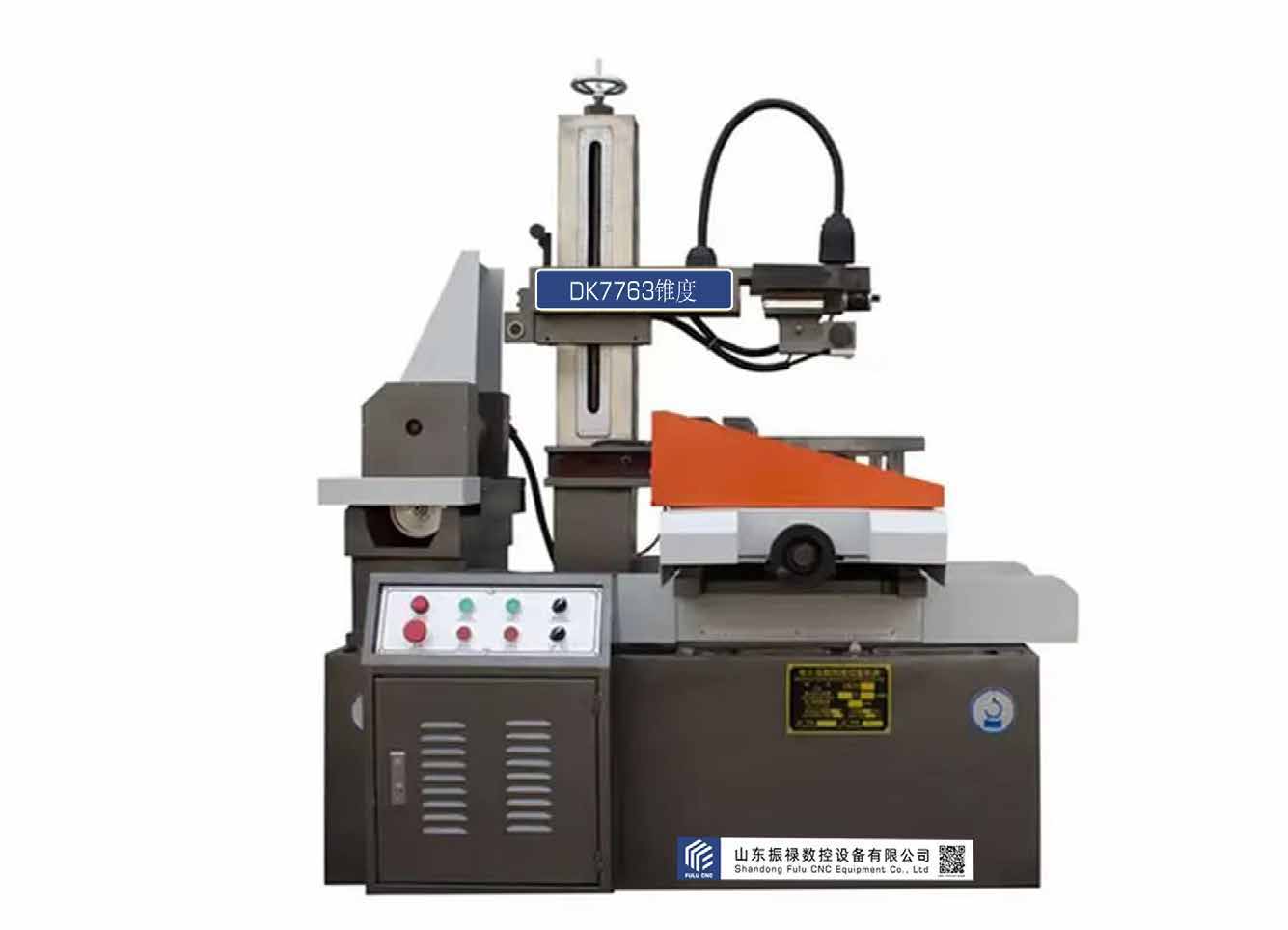
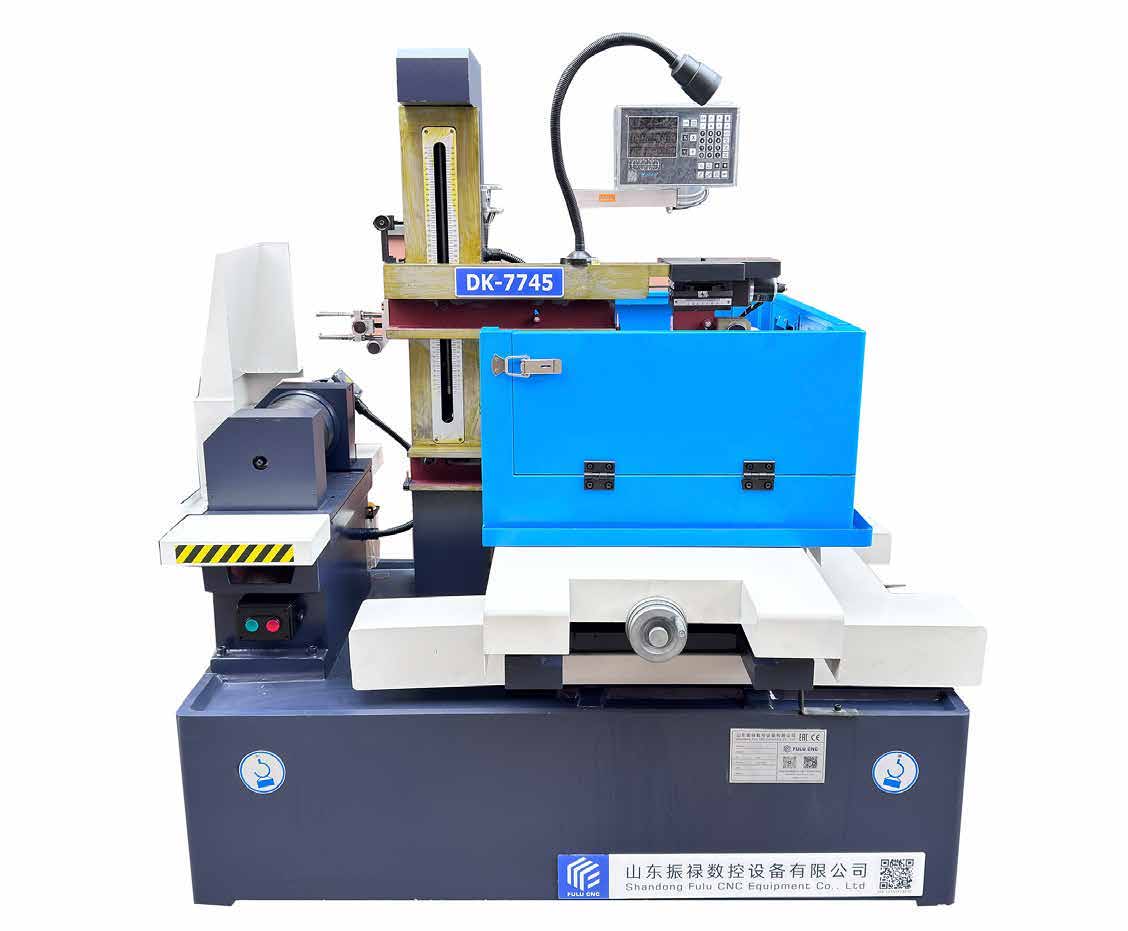
The catalog lists ten DK77 models. The photos below show DK7745 and DK7763; confirm appearance and equipment for the model you order.

DK7745
The catalog lists 450 × 550 mm X/Y travel for this model. Validate the full workpiece envelope and cutting conditions separately.

DK7763
The catalog lists 630 × 800 mm X/Y travel for this model. Check loading, workpiece thickness, and required cut geometry.
Identify the Cut Before Sizing the Machine
Provide the starter-hole positions, minimum internal radius, slot width, material, thickness, and the dimensions that must be inspected.
Show the full outline, entry path, holding tabs or clamp plan, and any surfaces that must remain untouched during cutting.
Specify the top and bottom geometry and workpiece thickness. Confirm the selected machine's actual taper and control capability rather than assuming it from DK77 model size.
Check overall part and fixture size, mass, X/Y travel, worktable, wire path, and handling method. The travel table alone does not prove usable cut size.
Use X/Y Travel as a First Filter
The manual lists ten DK77 models from DK7720 to DK77160. The model table below helps shortlist travel; the cut plan determines the final machine.
| Question | Why it changes the choice |
|---|---|
| Does the full path fit? | Wire approach, overtravel, fixture clamps, and workpiece edges may need space beyond the drawn contour. |
| Can the part be supported? | Workpiece mass, thickness, and clamping affect table, support, and usable cut area. |
| What finish and tolerance are required? | Material, thickness, wire, cut strategy, and inspection conditions determine the process review. |
| Is taper or a special profile needed? | Check the actual axis and controller scope on the quoted DK77 configuration. |
Travel Is Only the First Check
Workpiece and fixture
Provide the overall part size, thickness, mass, clamping arrangement, and usable cutting area.
Cut geometry
Show internal and external contours, slots, starts, and any taper requirements on the drawing.
Material and finish
Identify the conductive material, finish requirement, and whether multiple passes are expected.
Inspection
Agree on critical dimensions, measuring conditions, and the acceptance method for the actual part.
Travel Does Not Equal Maximum Workpiece Size
The manual's X/Y figures describe table movement. Include the path, setup margin, clamps, and wire approach when comparing models.
Length, width, height, and mass must fit the selected machine and loading plan. Request the model-specific table and clearance drawing.
State material and actual thickness, not just plate stock size. Confirm suitable wire, cutting conditions, and the required number of passes.
Define critical contour dimensions, corner radii, taper, surface finish, and the method and conditions used to check the finished part.
DK77 X/Y Travel by Model
The figures below are X × Y table travel in millimeters. They are not maximum workpiece dimensions or guaranteed cut size.
| Model | X × Y travel (mm) | Model | X × Y travel (mm) |
|---|---|---|---|
| DK7720 | 200 × 250 | DK7763 | 630 × 800 |
| DK7725 | 250 × 320 | DK7780 | 800 × 1,000 |
| DK7735 | 350 × 450 | DK77100 | 1,000 × 1,200 |
| DK7745 | 450 × 550 | DK77120 | 1,200 × 1,600 |
| DK7755 | 550 × 630 | DK77160 | 1,600 × 2,000 |
Confirm workpiece envelope, thickness, load, wire system, controller, surface finish, and cut conditions in the selected quotation.
Wire-Cut EDM FAQ
Does X/Y travel equal the largest part I can cut?
No. Travel describes axis movement. Usable cutting area also depends on workholding, wire path, part thickness, and machine-specific clearance.
Which details should I send for an internal profile?
Send the drawing with start-hole locations, internal radii, slots, thickness, material, and tolerance and finish requirements.
Can the machine cut nonconductive materials?
Wire EDM requires an electrically conductive workpiece for the discharge process.
Is a quoted accuracy value guaranteed for every cut?
The applicable material, thickness, wire, pass strategy, inspection method, and acceptance conditions must be defined for the requested part.
How should I shortlist the DK77 models?
Use the drawing to estimate the full wire path and setup margin, then filter by X/Y travel. Verify maximum workpiece size, thickness, mass, and clamping on the selected machine.
What determines whether a DK77 can meet my contour finish?
Material and thickness, wire and cutting conditions, number of passes, geometry, and inspection method all matter. Supply the required value and acceptance method for a process review.
Review a DK77 Model for Your Part
Send the part drawing, conductive material, overall size and thickness, cut geometry, tolerance and finish requirements, batch quantity, destination, and electrical requirements.
Send Your Part Drawing