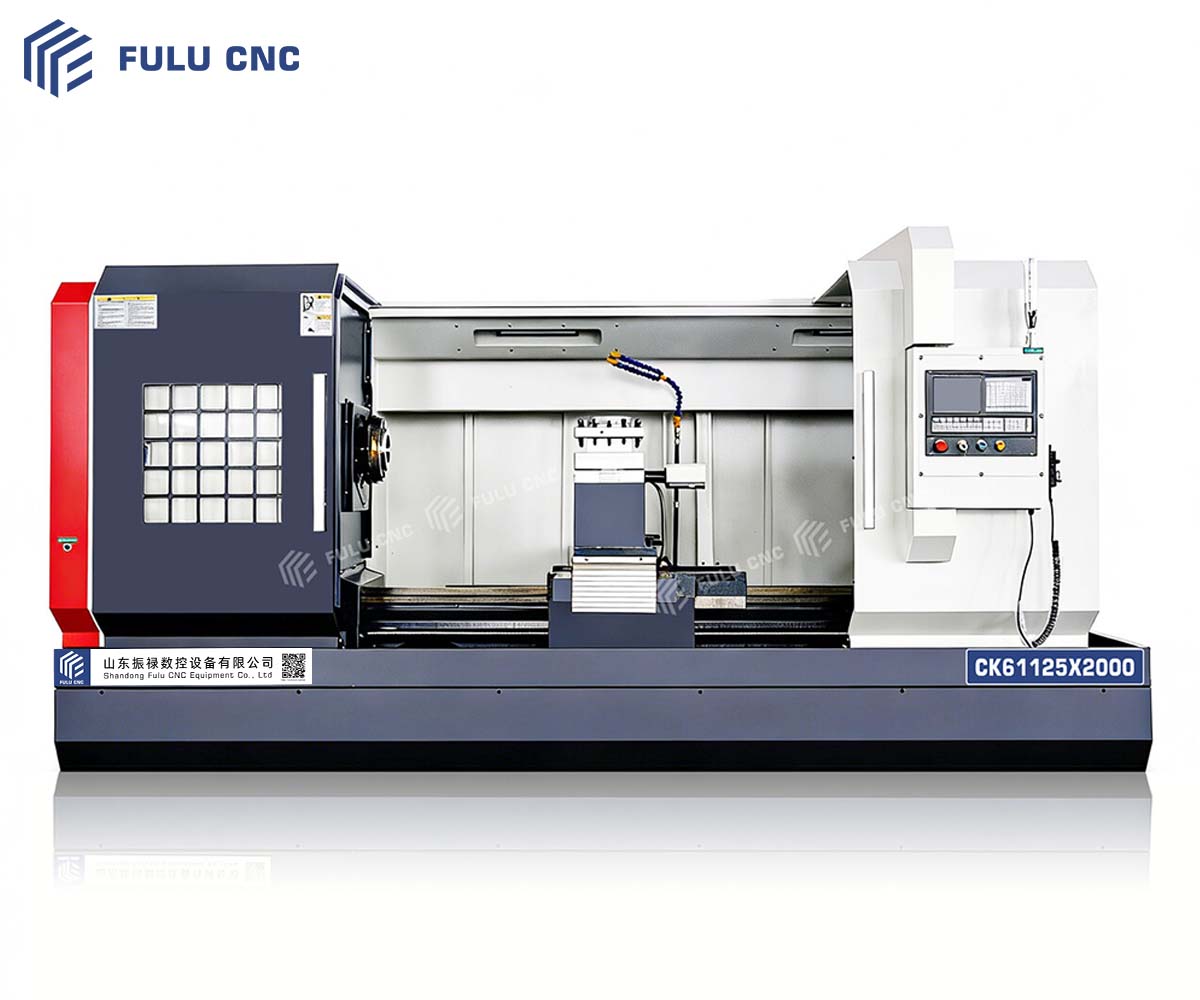
CK flat-bed CNC lathes
Catalog models include CK0640, CK6130, CK6140, CK6150, CK6163, CK6180, CK61100, CK61125, and CK61150. Check swing, turning length, bore, and workholding for the exact model.

Compare flat-bed, slant-bed, pipe-thread, and turn-mill configurations against your part drawing, workholding, cutting operations, and production plan.
Contact Us
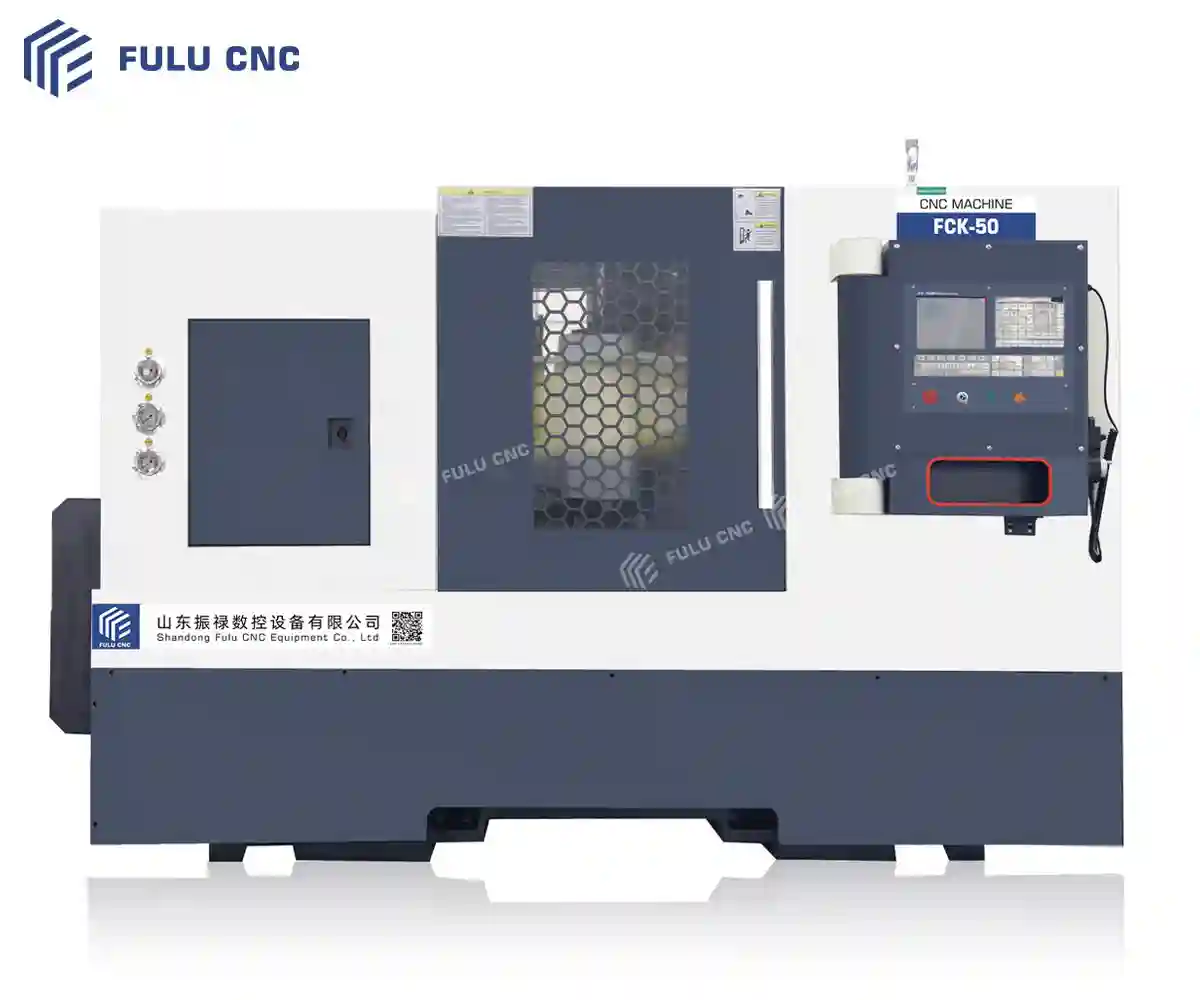
The catalog covers compact and heavy-duty CK flat-bed lathes, TCK/FCK slant-bed models, QK pipe-thread machines, and FCK driven-tool configurations.
Catalog models include CK0640, CK6130, CK6140, CK6150, CK6163, CK6180, CK61100, CK61125, and CK61150. Check swing, turning length, bore, and workholding for the exact model.
The catalog lists TCK36 and FCK40, FCK50, FCK56, FCK63, FCK70, and FCK100. Compare the selected structure, turning envelope, turret, and tailstock configuration.
QK1319, QK1322, and QK1327 appear in the pipe-thread range. Driven-tool and Y-axis variants need a model-specific tooling and operation review.
Start with the clamped part and every required operation. A model name or bed swing alone cannot establish the usable cutting envelope.
Record stock diameter, finished diameter, length, material, tolerance, and whether the part needs tailstock support. Compare CK and TCK/FCK candidates against the actual clamping and tooling plan.
Check swing over bed and carriage, available turning length, spindle bore, part mass, bed-length variant, and steady-rest or tailstock requirements. The CK61100/125/150 range has catalog bed swings of 1,000/1,250/1,500 mm; practical cutting size needs a model review.
Send outside diameter, bore passage, pipe length, thread form and pitch, front and rear clamping plan, and inspection criteria. The QK1319/1322/1327 catalog lists spindle bores of 190/220/270 mm respectively.
List all cross holes, flats, slots, and angular features. Specify whether driven tools or a Y axis are needed; confirm the chosen FCK-D/DY machine's turret, spindle functions, travel, controller, and interference limits.
These families answer different production requirements. Confirm the exact model and equipment list before treating any feature as included.
| Family | Start here when | Critical checks |
|---|---|---|
| CK flat-bed | The job is primarily turning and threading, with size and length driving selection. | Bed and carriage swing, turning length, bore, chuck, tailstock, and support. |
| TCK / FCK slant-bed | The part and production plan call for a compact enclosed turning layout and selected turret/workholding arrangement. | Actual cutting diameter and length, turret stations, chuck, tailstock, chip handling, and standard/optional status. |
| QK pipe-thread | The work includes larger pipe passage and specified pipe-thread operations. | Pipe OD, bore, thread form, front/rear clamping, length, and acceptance method. |
| FCK-D / DY | The drawing adds driven-tool operations; DY variants also need off-center travel. | Live-tool capacity, Y-axis travel where selected, spindle indexing, controller, tooling, and interference. |
Record maximum diameter, length, mass, and the size after workholding.
Check bore, chuck or collet plan, bar passage, and required support.
Separate turning and threading from drilling, milling, or off-center work requiring a verified driven-tool setup.
Agree on the drawing dimensions, inspection method, and selected standard and optional equipment.
Use the manual values as a first filter, then verify the complete envelope for the quoted machine.
Clearance above the bed. It is not the maximum finished diameter. The CK6140/6150/6163/6180 catalog figures are 400/500/630/800 mm respectively.
Tooling and carriage position reduce usable diameter. The FCK50/FCK56/FCK63/FCK70 manual lists maximum cutting diameters of 440/540/360/460 mm respectively; confirm the selected chuck and tool arrangement.
Bore is the spindle passage, while the chuck and drawtube set separate workholding limits. For QK1319/1322/1327 the listed bores are 190/220/270 mm; confirm the pipe and chuck interface.
Maximum stated part length and axis travel measure different things. Include chuck projection, center or tailstock, tool clearance, and the required end operations in the setup review.
These are model-specific catalog values in millimeters. They are bed swing, not maximum finished turning diameter.
| Model | Swing over bed (mm) | Catalog family |
|---|---|---|
| CK6140 | 400 | CK flat-bed |
| CK6150 | 500 | CK flat-bed |
| CK6163 | 630 | CK flat-bed |
| CK6180 | 800 | CK flat-bed |
| CK61100 | 1,000 | CK flat-bed |
| CK61125 | 1,250 | CK flat-bed |
| CK61150 | 1,500 | CK flat-bed |
Confirm the quoted bed length, turning diameter, spindle bore, chuck, controller, turret, and tailstock for the selected machine.
Use these existing model pages for machine-level specifications and configuration review.
A useful quotation should identify the exact bed-length variant, workholding, tooling, support, controller, and any optional equipment needed for the drawing.
Before the order: agree on the part drawing, material, critical dimensions, cycle or batch requirement, inspection method, and the configuration list. Ask for machine-specific tests and supporting evidence where tolerances or process risk require them.
Next step: review the FCK50 or CK61125×2000 model details, then send the part information for a fit check.
No. Bed swing describes clearance over the bed. Confirm the actual turning diameter, workholding, tool clearance, and part length for the quoted configuration.
Compare part size, chip flow, tooling, production volume, and setup requirements with the CK alternative. The correct choice depends on the workpiece and selected machine configuration.
No. The FCK-D and FCK-DY variants must be specified separately, and their turret, spindle, travel, and controller functions should be confirmed.
Send pipe diameter and length, bore requirement, thread form and pitch, material, clamping plan, and inspection requirements.
Send the part drawing, stock and finished diameters, length, material, batch size, required operations, workholding, and tolerance. Compare the exact turning envelope and configuration rather than the series names alone.
No. Drawtube, chuck or collet, and feeding arrangement can narrow usable bar passage. Confirm all of them for the quoted machine.
The manual shows options for some families, but the available combination and standard equipment vary by model. Request the exact controller, chuck, turret, and tailstock list in the quotation.
Send the part drawing, material, maximum diameter and length, operations and thread details, critical tolerances, batch volume, workholding needs, destination, and electrical requirements. We can then review a model and configuration for quotation.
Contact Us